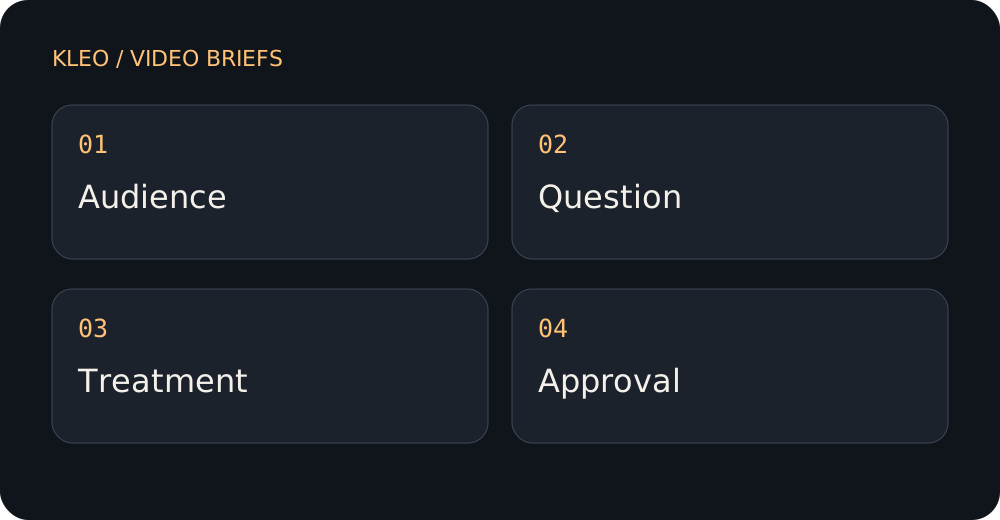
A practical method
- Make a claim list containing the precise statement, its source URL and any qualification.
- Mark disputes and missing evidence explicitly rather than asking the assistant to fill gaps.
- Approve the spoken facts before the storyboard adds visual interpretation.
An example brief to adapt
Use only the three supplied source excerpts to plan a 90-second explainer. For every factual sentence, identify its supporting excerpt in the treatment. If the excerpts disagree, flag the disagreement for me. Do not invent quotations, dates or expert interviews. Wait for approval before rendering.
Review before moving on
- Can every important factual claim be traced?
- Do pictures imply stronger evidence than the narration?
- Are sources suitable for the actual claim?
Record a concrete observation beside each check: a line in the treatment, a source passage or a timestamp in the downloaded film. If you cannot inspect an item yet, leave it open. A request in a brief is an intention; the result is what must be reviewed.
Download this guide’s editable text worksheet
What to avoid
A source link by itself is insufficient when a long page contains several different claims. Save the relevant passage and its context with your production notes.
Sources and scope
The method and fictional brief are original editorial guidance for planning and review. They do not establish a measured performance gain or guarantee a particular render. Product statements follow Kleo’s public pages, checked on 2026-09-23; official platform guidance is linked where relevant.
- Kleo FAQ — Product capabilities and limitations; reconfirm before production.
- Kleo pricing — Current starter offer, product conditions and quoted credit costs.
See the published Kleo examples to inspect actual showcased work. Example films may reflect a different production setup; check the current offer for your own job.