Choose the decision you need to make
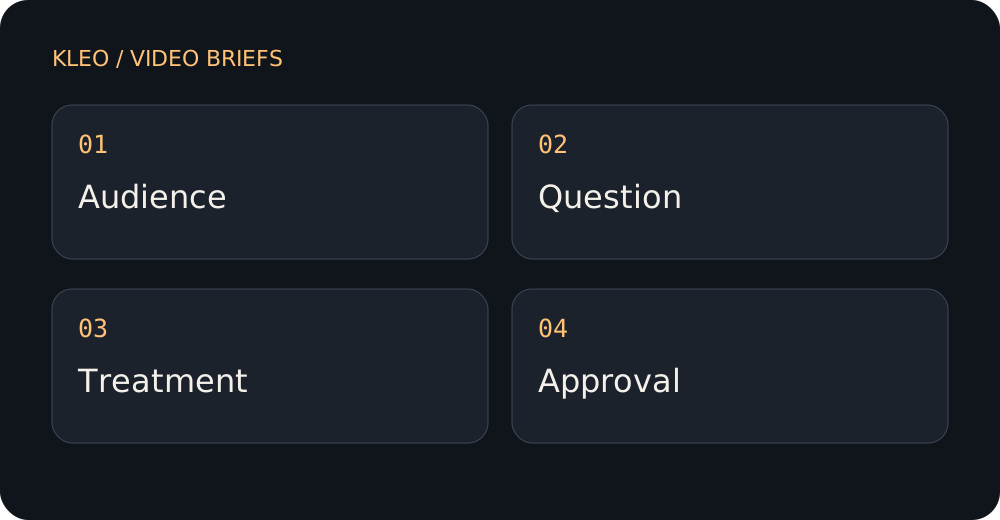
A useful brief gives the production conversation a decision to make. Start with the viewer, the question and the intended ending. The guides here cover different inputs to that decision: factual evidence, visual references, client requirements and revision history. Use the downloadable worksheet on each guide to record your own choices. These are editorial methods, not promises that a prompt will control every generated detail.
A useful explainer begins with a question that can be answered within the running time. Narrow the question before choosing a visual style: a polished film about everything usually leaves the viewer with nothing specific.
An audience brief describes what the viewer already understands, why they are watching and what they need next. Age or job title alone cannot determine the right vocabulary or level of explanation.
A source pack separates approved facts from narrative instructions. Give each important claim a source, a date and wording the narrator may safely use; a confident treatment is not evidence that its claims are true.
Creative constraints work best as a short list of visible requirements and clear exclusions. They help a director review a treatment; they do not guarantee that a generative renderer will follow every instruction exactly.
A treatment is the short written plan for the film: its premise, angle, opening, development and ending. Approve that structure before paying to render scenes, because a beautiful shot cannot repair an unclear argument.
Turning a script into a brief means identifying what must be spoken, what can be shown and what cannot be reproduced faithfully. Preserve the intended meaning before compressing the text into a shorter film.
A useful look reference identifies lighting, palette, framing and material qualities. Naming a famous film alone leaves the assistant to guess which qualities matter and may encourage unnecessary imitation.
Effective revision notes identify a specific moment, explain the problem and describe the desired change. A request to make everything more cinematic gives no clear basis for deciding whether the next version is better.
A client brief should establish the message, audience, deliverables, approvals and supplied evidence. It is a production agreement in plain language, not a substitute for the client's factual or brand review.
A short film's call to action should follow naturally from the information it gives. One clear next step is easier to evaluate than a closing list asking viewers to subscribe, buy, share and contact you simultaneously.
A brief history records which story, narration and constraints produced each result. Without version labels, feedback can refer to one draft while the assistant renders another.
Move through the production
Browse all production topics or read the complete Kleo workflow. Choose guides by the decision at hand, then keep your approved choices with the project.