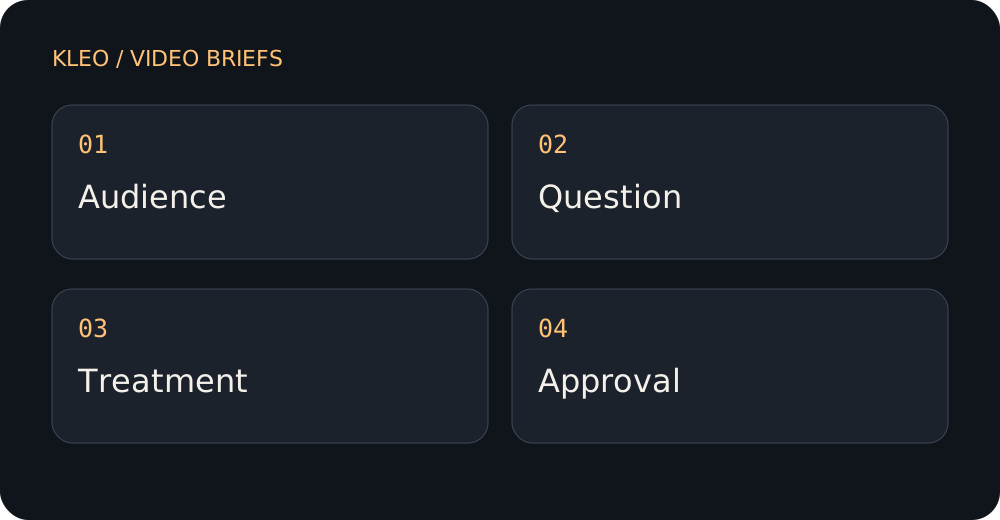
A practical method
- Choose the action that fits the viewer's current level of interest.
- Make sure the story supplies a reason to take that action.
- Reserve enough time for a calm spoken ending rather than squeezing it into the last instant.
An example brief to adapt
Plan a 30-second animation introducing a fictional neighborhood book exchange. End with one spoken invitation to read the participation guide. Do not invent an address, opening date or signup link. Keep the final visual simple so I can add verified details later in an editor.
Review before moving on
- Is there one main action?
- Does the viewer know why it is useful?
- Are destination details verified before upload?
Record a concrete observation beside each check: a line in the treatment, a source passage or a timestamp in the downloaded film. If you cannot inspect an item yet, leave it open. A request in a brief is an intention; the result is what must be reviewed.
Download this guide’s editable text worksheet
What to avoid
A call to action is not a performance guarantee. Test whether people understand the invitation before judging whether a different visual effect is needed.
Sources and scope
The method and fictional brief are original editorial guidance for planning and review. They do not establish a measured performance gain or guarantee a particular render. Product statements follow Kleo’s public pages, checked on 2026-09-23; official platform guidance is linked where relevant.
- Kleo FAQ — Product capabilities and limitations; reconfirm before production.
- Kleo pricing — Current starter offer, product conditions and quoted credit costs.
See the published Kleo examples to inspect actual showcased work. Example films may reflect a different production setup; check the current offer for your own job.