Give the preview one job
Use the first animatic to answer a small creative question. For example: can a viewer understand that a paper boat has returned to the person who made it? That is a story test you can judge from scene order, narration and recognisable visual details. It does not require a promise that a generated character or object will stay identical across future motion clips.
The outline below is a fictional planning example, not an executed prompt or a report of a Kleo render. Ask your assistant to turn it into a treatment, then check that the chosen product is an animatic before approving production.
| Approximate beat | Picture intention | What to check |
|---|---|---|
| 0–8 seconds: departure | A maker folds a paper boat beside a window. Give the boat one simple identifying detail. | Can the viewer identify the maker and the boat without a long explanation? |
| 8–21 seconds: journey | Two clear locations suggest the boat’s journey. Narration connects them rather than listing unrelated scenes. | Does each scene move the same story forward? Is the route understandable? |
| 21–30 seconds: return | The boat reappears at the original window. Repeat the identifying detail and resolve the opening. | Does the ending make the return clear, rather than merely showing another boat? |
Scroll the table sideways to compare all columns.
Watch in three separate passes
Accept the animatic when it answers your chosen question, revise the plan when it does not, or stop if the story needs a different approach. A film is a separate job with a separate quote; approving this preview does not authorize it.
- Watch the sequence without trying to evaluate every detail. Write one sentence describing what happened. If it differs from your intended story, revise the treatment before investing in generated footage.
- Listen to the narration and compare it with the approved wording. Note unclear names, missing words and awkward pacing with timestamps. Good written narration is not proof of accurate audio delivery.
- Inspect framing and continuity. Check whether the subject remains visible, the intended visual detail survives, and the camera movement helps rather than distracts. Record defects as observations; do not mark an unrendered future clip as passed.
After the first preview
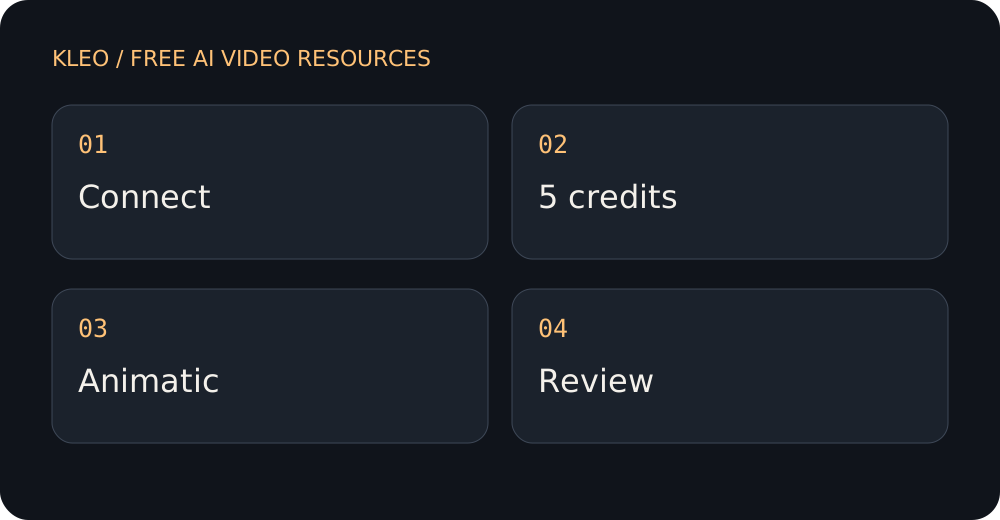
With an otherwise untouched starter account, one 20-second animatic uses all 5 starter credits. Another version needs new credits: a confirmed email adds 3, a pack adds more. Check the reported job status, balance and new quote first; do not assume revisions are included.
Save the MP4 within its 7-day download period. Keep the approved treatment and your timestamped observations beside it, but keep your private Kleo key out of shared worksheets. The finished-file deadline is different from the retention of prompts and account records described in Privacy.
A practical method
- Choose one simple story within the current animatic duration range.
- Review the treatment and narration before using the credits.
- Judge sequence and pacing while keeping the preview's limitations in mind.
An example brief to adapt
Plan a 20-second Kleo animatic about a paper boat returning to its maker. Use the animation look, one English narrator and 9:16 framing. Show the opening, journey and ending; confirm a 5-credit animatic quote against my available balance. Ask me about any remaining options. Wait for my approval before rendering. Do not switch to a generated-footage film or buy credits.
Review before moving on
- Does the story make sense in sequence?
- Is narration clear?
- Have you saved the result while its link is available?
Record a concrete observation beside each check: a line in the treatment, a source passage or a timestamp in the downloaded film. If you cannot inspect an item yet, leave it open. A request in a brief is an intention; the result is what must be reviewed.
Download this guide’s editable text worksheet
What to avoid
An animatic can expose a weak story, but it cannot verify the behavior or quality of every generated clip in a later film. Treat those as separate review stages.
Sources and scope
The method and fictional brief are original editorial guidance for planning and review. They do not establish a measured performance gain or guarantee a particular render. Product statements follow Kleo’s public pages, checked on 2026-09-27; official platform guidance is linked where relevant.
- Kleo FAQ — Product capabilities and limitations; reconfirm before production.
- Kleo pricing — Current starter offer, product conditions and quoted credit costs.
- Kleo Terms — Starter-credit conditions, ownership, output mark and temporary file storage.
- Kleo Privacy — Separate retention periods for finished files and production records.
See the published Kleo examples to inspect actual showcased work. Example films may reflect a different production setup; check the current offer for your own job.